
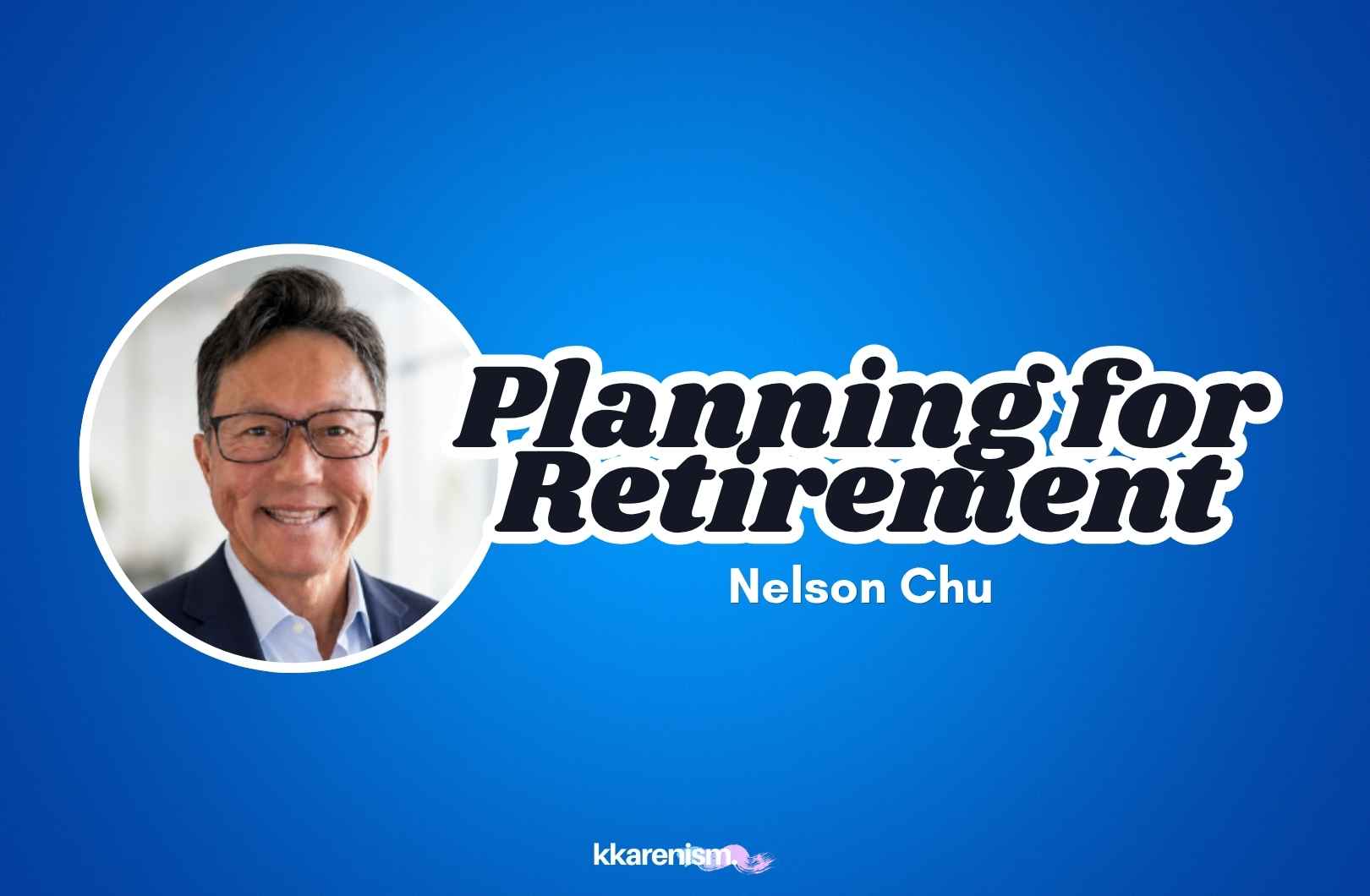
If you think retirement is a later problem, you’re mistaken!
Regardless of how early you are in your career, it’s important to set up a system that will help you achieve financial freedom.
Why?
Because you probably don’t want to work a 9-5 job for a few more decades. Because you probably want to try different things throughout your career. Because you probably want the financial freedom to experiment if you get laid off one day.
Below are some tips from Nelson Chu, who was ready for retirement when he got laid off last summer. Instead of panicking about no longer having a job, Nelson was able to ease into his retirement and has been enjoying this new chapter of his life and career!
1. Save early to compound investments as much as you can
Save before you spend because compounding really works in your favour over the years.
The difference between $100K of investments vs. $1M of investments is life changing. You feel much more secure with $1M compounding every month.
From personal experience, Nelson suggests maxing out 401K contributions and following the S&P 500 index.
Individual stocks are riskier, so invest in what you’re familiar with (e.g. Fortune 100 companies are usually a good bet).
Set up auto investments with your bank accounts and try putting aside 20-25% of your paycheck.
2. Don’t follow the recession headlines
A lot of people pull money out when the stock market is down.
But this is actually the best time to buy stocks at a discount.
You WANT to buy when people are fearful.
But be wary of ‘Get Rich Schemes’. Slow and steady gets you to where you need to be.
3. Clear debts before buying a home
Buying a home can be beneficial because of tax breaks from the government. But clear your other debts first.
Don’t feel pressured to do everything at the same time.
4. Invest in 529 Plans if you’re a parent or grandparent
Take advantage of 529 plans to help pay off your children’s educational expenses (K-12 education, apprenticeship programs, student loans) in the future.
College savings plans and prepaid tuition plans offer tax-deferred growth. Withdrawals are tax free when used for qualified education expenses.
In some states, you may be eligibile for tax deduction for your contributions. More details here.
5. Be prepared for layoffs & keep growing in your career
Focus on understanding how you get promoted at your company, and be deliberate about it. Talk to old-timers, mentors, managers to develop a plan and take incremental steps. Everything is incremental and doesn’t happen overnight, so start now!
Layoffs happen in cycles, so don’t be surprised because it can happen to you at any time (and maybe more than once). Everybody is replaceable, even the ones who seem the most invaluable. Nelson recommends reading ‘Who Moved My Cheese‘ to think ahead about your career and opportunities.
And if you do get laid off, it’s an opportunity to upskill, re-skill, and re-invent yourself. Research the job market to understand what jobs and skills are in demand. Then sharpen those skills through certifications and courses (use AI to create a learning syllabus).
Network with your peers, but avoid envy because it brings out the nastiness in you. Be deliberate about your relationships.
It’s never too late to rewrite your story. I began my Plan B at 38, and it changed my life. Start earlier if you can — the sooner you begin, the greater your chances of success.
– Nelson Chu
Thanks for reading!
A big thanks to Nelson Chu for taking the time to chat and share this thoughts about retirement and layoffs. Please also check out Part 2 about Building Your Plan B, in Nelson’s own words, after a year since we connected!
I hope this inspires you to start thinking about retirement, save a little bit more each month, and better prepare for both planned and unpredictable times throughout your career. Let me know what you think about this topic on LinkedIn.
Best of luck!